
Edge
Sensors, SCADA streams, satellite imagery, operator records, and documents become signed evidence with provenance, timestamps, and instrument identity.


Turn carbon claims into continuous, replayable evidence.
TerraQura is building verification infrastructure intended to connect physical measurement, methodology checks, issuance, transfer, retirement, and disclosure in one traceable evidence lineage.
Its public programme is a multi-year phased build. The project describes methodology categories as pilot tracks being engineered, not as live registries, issued credit volumes, completed deployments, or regulatory accreditations.
Edge, verify, settle, report
Capture, verify, issue, retire
Foundation through scale
Removal, biochar, restoration, industry
Carbon markets ask buyers, assurers, and regulators to trust claims assembled from instruments, satellite observations, operational records, methodology rules, and manual documents that often live in different systems.
When provenance is lost, later assurance becomes a reconstruction exercise. A unit can move through issuance and retirement without an accessible path back to instrument identity, timestamps, calculation choices, counterfactual baselines, anomalies, or reviewer findings.
TerraQura’s thesis is to preserve those dependencies from source to disclosure. The aim is not to make every credit identical, but to make every accepted claim replayable within its declared methodology and evidence boundary.
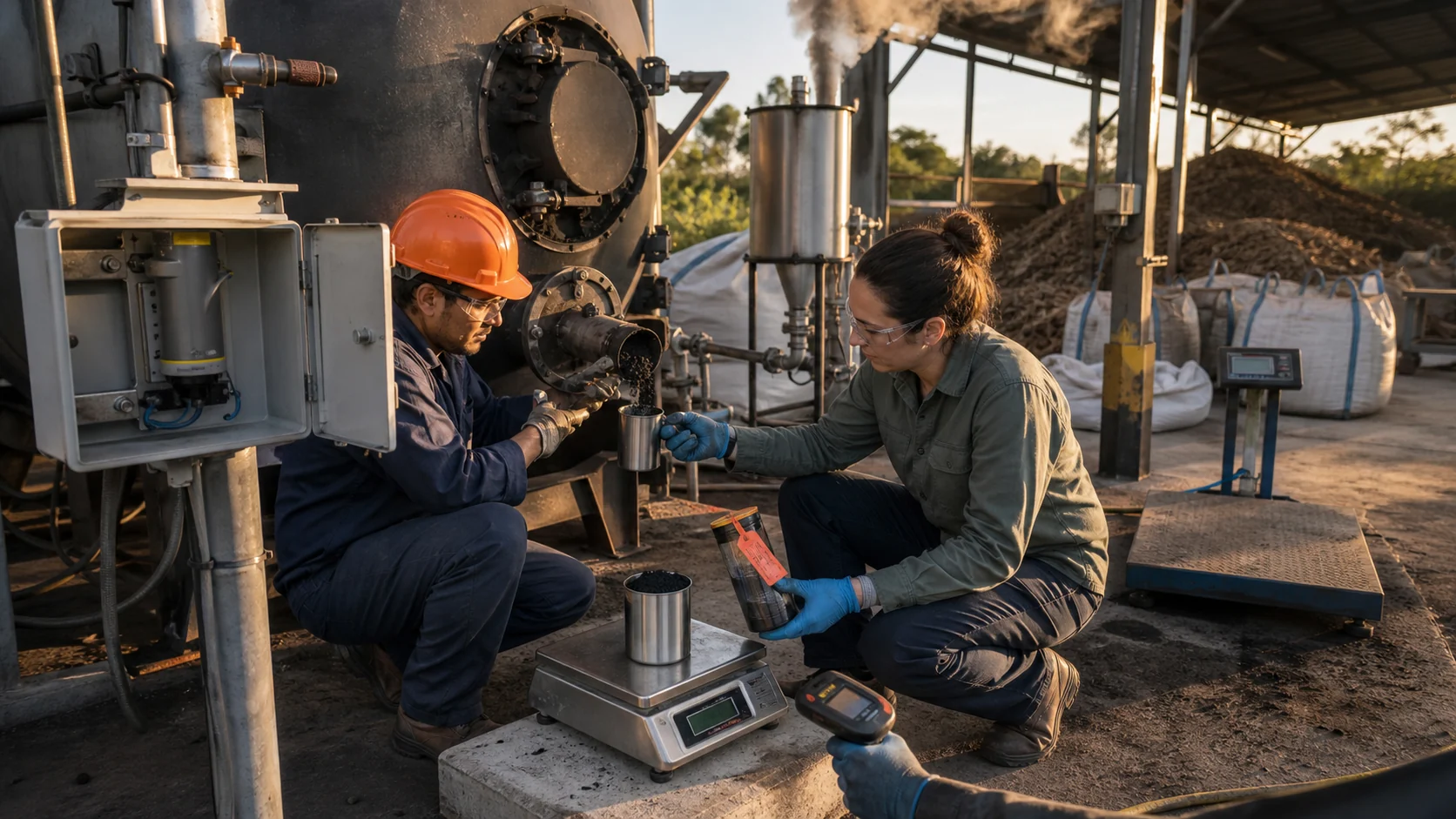
Sensors, SCADA streams, satellite imagery, operator records, and documents become signed evidence with provenance, timestamps, and instrument identity.
An AI evidence engine is intended to test inputs against methodology bounds and counterfactual baselines, identify anomalies, and produce findings an assurer can replay.
Accepted units are intended to be issued, transferred, and retired on a permissioned ledger while preserving lineage, counterparty privacy, and the history of every state change.
The evidence graph is translated into audit packs, Article 6 records, and disclosure-oriented outputs for IFRS S2 and ESRS E1 workflows.
Bind physical observations, operational telemetry, satellite data, laboratory records, and documents to source identity and time.
Evaluate completeness, methodology fit, calibration context, baselines, leakage, uncertainty, anomalies, and required reviewer action.
Create an eligible unit only after evidence and assurance gates are satisfied, with lineage and permission rules attached.
Record the final claim, beneficiary, purpose, and disclosure package so a retired unit cannot be silently reused.
Track feedstock, chain of custody, conversion, energy balance, stable carbon fraction, storage conditions, leakage, and permanence evidence.
Connect production parameters, sampling, material analysis, end-use records, and site evidence to the methodology calculation.
Combine spatial observation, field sampling, counterfactual land-use models, uncertainty, reversals, and continued monitoring.
Use calibrated operational data and declared boundaries to distinguish measured reduction from modelling or activity estimates.
Designed around market integrity and sovereign transfer records.
Method and evidence structures oriented toward greenhouse-gas quantification and reporting.
Reviewer access and replayable findings for validation and verification bodies.
Evidence packages intended to support IFRS S2 and ESRS E1 reporting workflows.
An engineering orientation, not a claim of current certification.
Build the methodology engine, signed evidence pipeline, replay inspector, and internal ledger.
Add counterparty privacy, assurer access, issuance and retirement state, and Article 6 record support.
Produce IFRS S2 and ESRS E1 exports, audit packs, and a managed institutional-buyer cohort.
Address data residency, supervisory access, ITMO interoperability, and sovereign registry responsibilities.
Expand methodology coverage, throughput, and inter-registry connectivity only after earlier controls are evidenced.