
Garment representation
Encode three dimensional geometry, weave topology, openings, transitions, material zones, tolerances, and required post process operations in one manufacturable model.


Programmable 3D weaving for garment scale manufacturing.
SYNTROPY is exploring whether multi axis weaving, robotics, and machine intelligence can translate a digital garment model directly into a shaped woven structure.
The research object is not a faster conventional loom. It is an integrated production system in which geometry, weave structure, yarn behaviour, machine motion, inspection, and the remaining finishing operations are modelled and measured together.
Produce repeatable shaped woven structures directly from yarn
Geometry, material rules, machine instructions, and inspection remain linked
A programme target under controlled measurement, not a demonstrated result
Telemetry, vision, defect classification, and corrective control
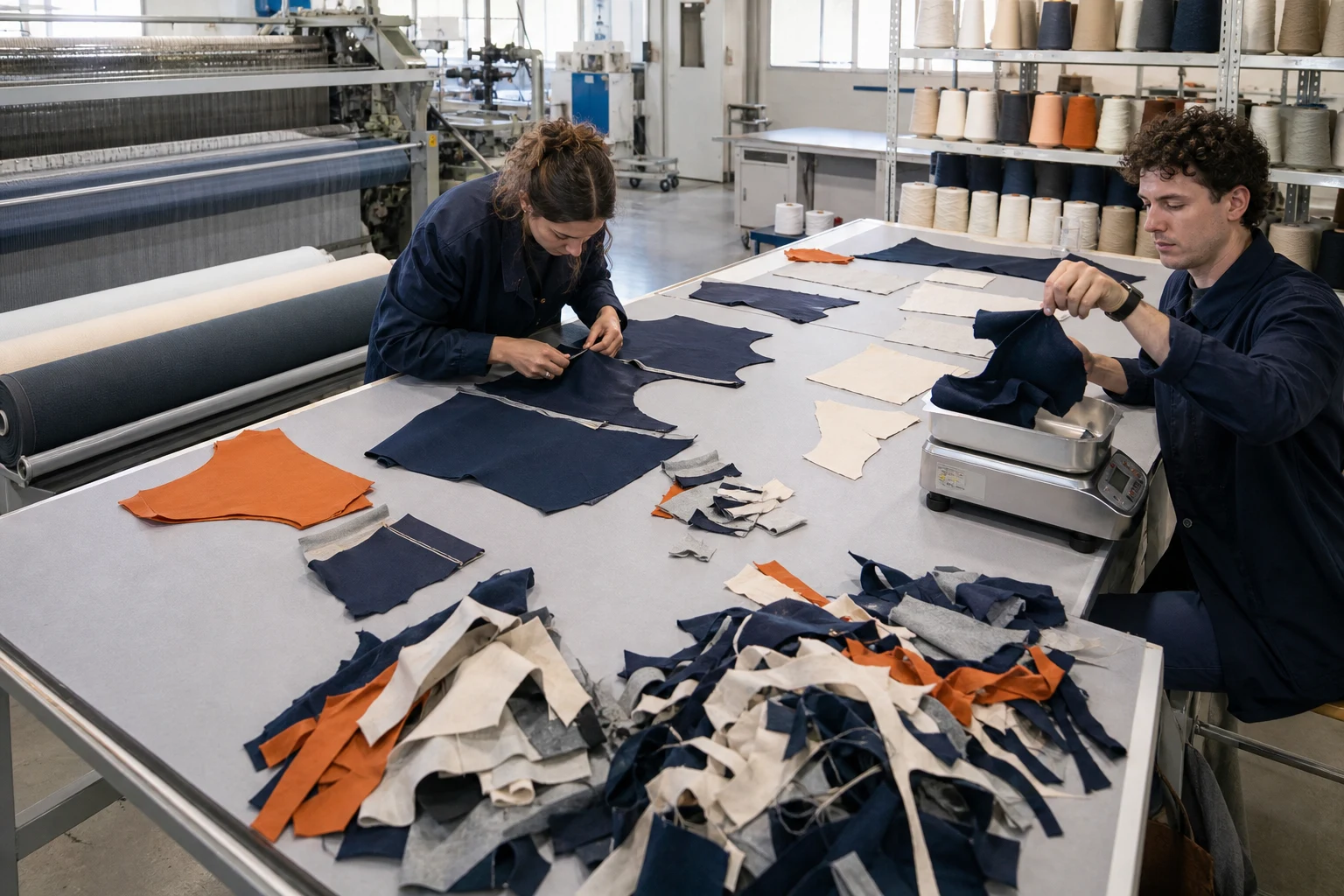
Flat cloth must be cut, aligned, joined, assembled, finished, inspected, and moved between operations before it becomes a garment.
Every handoff creates another source of dimensional variation, material loss, queue time, work in progress, and missing process context. Forecast led production adds a separate risk: the physical system commits material long before demand is known.
SYNTROPY tests a different architecture. Shape is treated as part of weaving itself, so the engineering problem moves upstream into yarn paths, material behaviour, machine kinematics, digital compilation, automatic handling, and in process inspection.
Encode three dimensional geometry, weave topology, openings, transitions, material zones, tolerances, and required post process operations in one manufacturable model.
Predict yarn paths, formation sequence, strain, collision, distortion, material response, and manufacturability before committing a physical run.
Translate the approved digital model into versioned machine instructions, motion plans, tension set points, changeovers, and inspection expectations.
Coordinate yarn delivery, forming elements, robotic motion, take up, transfer, and controlled shape creation within a guarded instrumented system.
Use process telemetry and vision to detect defects, compare geometry with the digital intent, intervene where possible, and preserve the evidence record.
Bind orders, material identity, machine configuration, operator actions, inspection, exceptions, and released output without losing traceability at handoffs.
Create openings, junctions, curvature, thickness transitions, stable edges, and garment scale volume while maintaining repeatable woven structure.
Develop manufacturability checks, simulation, path generation, configuration control, and repeatable execution from a versioned garment file.
Measure tension, yarn state, geometry, defects, and machine condition early enough to inform corrective action rather than end of line rejection.
Characterise selected cotton, wool, synthetic, blended, and emerging fibres by friction, strength, elongation, moisture response, stability, and process window.
Reduce manual yarn preparation, transfer, retrieval, orientation, and joining while making unavoidable human operations explicit and measurable.
Design modular guarded cells for changeover, calibration, maintenance, exception handling, operator visibility, and traceable orchestration.
Test fit, dimensional stability, tensile and abrasion behaviour, wash durability, comfort, repairability, and end of life pathways by intended use.
Fix the garment or component, dimensions, material, weave, openings, tolerance, required properties, and permitted finishing operations.
Generate the machine plan, predict collisions and distortion, and declare the parameters and uncertainties that the physical run will test.
Record yarn identity, machine configuration, motion, tension, interventions, faults, cycle stages, and environmental conditions.
Compare the released structure with the digital model across dimensions, curvature, openings, repeat runs, and identified defect classes.
Evaluate tensile behaviour, abrasion, wash cycles, dimensional change, comfort, repair, and failure at the intended use boundary.
Report trimming, joining, finishing, inspection, handling, rework, and rejected material rather than describing a partial article as a completed process.
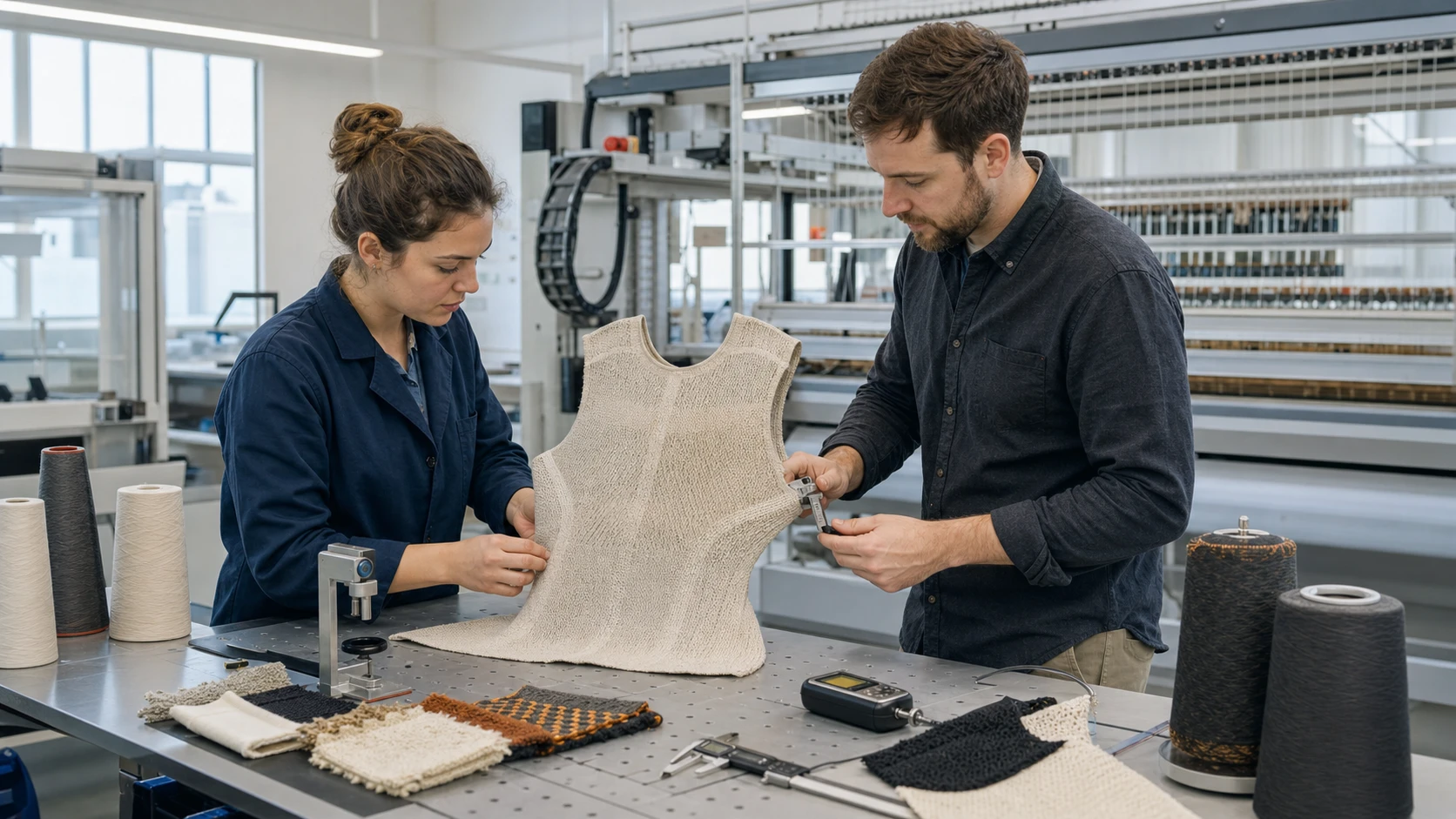
Dimensions, curvature, openings, thickness, transitions, tolerance, and repeatability across runs.
The below 2 percent material loss figure remains a controlled programme target until measured across representative products.
Reported with machine uptime, changeover, interventions, batch size, and the exact definition of a released garment.
Acceptance limits belong to the garment use case and tested yarn system rather than a universal compatibility claim.
All preparation, transfer, trimming, joining, finishing, inspection, and rescue operations remain visible.
Material, energy, transport, maintenance, yield, use, repair, and end of life must be compared before claiming a net reduction.
Shirts, trousers, outerwear, and denim studies where stable woven geometry and reduction of panel assembly can be tested directly.
Garments whose reinforcement zones, durability, fit, traceability, and repair requirements can be specified and verified.
Engineered local stiffness, ventilation, stretch control, multi material zones, and repeated fit within a declared activity and care regime.
Demand responsive cells evaluated by actual changeover, yield, quality, uptime, operator work, and traceable fulfilment rather than projected throughput.
SYNTROPY is an R&D-stage programme. Complete garments directly from yarn, elimination of downstream sewing, broad material compatibility, short cycle times, and high throughput remain engineering objectives.
The next validation milestone is a repeatable shaped article with a declared digital model, yarn system, machine configuration, tolerances, material utilisation, cycle record, defect analysis, durability result, and a complete account of remaining operations.